The Essential African Safari Packing List (+ Top Tips!) 2026
Planning a safari and unsure what to pack? This essential African safari packing list, crafted from my experience as an adventure traveler who has been on 5 safaris across 3 African countries, will ensure you’re fully prepared.
This list covers everything you need for different types of safaris, including game drive safaris, walking safaris, canoe or paddling safaris, horse safaris, gorilla safaris, and mountain trekking safaris. By following my safari packing list and top tips, you’ll pack appropriately while also considering luggage restrictions, weather conditions, and essential gear.
At the end of this post, you’ll find a free printable safari packing list to make preparing for your trip even easier!
Travel Jewels contains affiliate links and is an Amazon Services LLC Associates Program member. If you make a purchase using one of these Amazon links, I may receive compensation at no extra cost to you. Please read my privacy notice for more information.
Complete African Safari Packing List
Here’s everything you need to bring to ensure a smooth and enjoyable safari experience.
Essential Safari Gear
The absolute must-haves that every safari traveler should pack include the following:
Shop my hand-picked favorites to stay comfortable, protected, and stylish on your safari by clicking here.
1. Luggage
Choosing the right luggage is crucial. You want to be well-prepared while keeping your luggage within airline weight limits. This is particularly true if you’re going on a fly-in safari and taking a bush plane with a 33-44 lbs weight restriction, including your personal items and carry-on bag.
Important Tip:
- Soft-sided duffle- Most people don’t know this, but soft-sided duffle bags are often required for fly-in safaris. Here are two of the best options: Cotapaxi Allpa 35L Travel Pack and Gonex 60L Travel Duffel Bag
- Small waterproof backpack- to carry essential items while you’re on game drives, walks, and safari activities
Before you finalize your luggage, make sure you understand your airline’s carry-on rules. My full guide to carry-on packing tips breaks down exactly how to maximize your allowance on any trip
2. Clothing
Safari clothing should be lightweight, breathable, and neutral-colored to blend with the environment and keep you comfortable across a range of temperatures. At a minimum, I recommend these basics:

Tops & Outerwear
- Overshirts or tunics (mid-sleeve or long-sleeve)
- Moisture-wicking tank tops or t-shirts
- Fleece jacket
- Light pullover sweater
- Lightweight rain jacket or poncho
Bottoms
- Lightweight, water-resistant pants
- Leggings or linen pants
Also, pack a casual outfit (slacks and a shirt or a dress) for dinnertime.
Undergarments
Footwear
- Blister-proof socks– beneficial for walking safaris
- Lightweight hiking boots
- Sandals – for relaxing around the camp or lodge
- Flip flops- for shower shoes
Accessories
- Buff Neck Gaiter– to protect your face from dirt and dust
- Wide-brimmed hat– good safari hat provides full sun protection, especially for the back of your neck, and is breathable, allowing heat to escape
- Scarf- perfect to warm yourself up on chilly morning and evening game drives
- Swimsuit- some lodges have pools
- Sunglasses with polarised lenses
- Sleepwear
Pro Tip: When packing consider that most camps/lodges provide laundry service, but will not wash your undergarments due to local culture and customs. This means you can re-wear your clothes, making it easier to stick to luggage limits.
3. Toiletries
Most camps provide shampoo, conditioner, soaps, and insect repellent, so you don’t need to bring these unless you have specific brand preferences. Be sure to use travel-friendly bottles to save weight and space. Stick to biodegradable toiletries to minimize your environmental impact.
Skincare & Sun Protection
- SPF 50 sunscreen
- Lip balm with SPF
- Soothing after-sun lotion
- Moisturizing lotion
Personal Hygiene
- Toothbrush, toothpaste, and floss
- Deodorant
- Hand sanitizer
- Wet wipes
- Hairbrush or comb
- Contact lens fluid (if needed)
- Feminine hygiene products (if needed)
- Shaving accessories
Pro Tip: Bring a pair of glasses as a backup in case your contact lenses get irritated by dust.

4. First-Aid Kit
To stay prepared for any minor health issues, pack the following to last you for your entire trip:
- Malaria medication- Check if your safari camp is in a malaria area and if malaria prophylaxis is recommended.
- Ibuprofen
- Immodium
- Benedryl
- Dramamine
- Cold/Flu medicine
- Antiseptic wipes or cream
- Band-aids
- Blister pads- If you’re going on a lot of walking safaris
- Hydration Packets
- Clinical Thermometer
- Prescription medications-Bring any prescription medications you take regularly. Keep prescriptions in their original bottles and store them in your carry-on bag.
Pro Tip: Save cost on travel clinic consultation and medication costs by using Runway Health. I used them to cut my expenses on my malaria prevention and traveler’s diarrhea medication for my trip to Kruger National Park.
Before you arrive: I highly recommend pre-treating your safari clothing with Permethrin to keep mosquitoes at bay.
5. Electronics
- A small, LED flashlight or a compact headlamp– Great for sunrise and evening game drives
- Travel plug adaptor– Africa generally uses 3-prong round or square plugs
- Travel-sized power strip– Charge multiple devices at once
- Sony ZV-E10 mirrorless camera — My go-to camera for travel. Lightweight, excellent in low light, and the image quality is stunning for wildlife shots at golden hour.
- Tamron Lens 28-75mm– I use this lens 75% of the time I travel.
- DJI Osmo Pocket 3 — My favorite for smooth video and vlogging on safari. Compact enough to fit in your pocket, but shoots cinematic footage.
- Extra memory cards — You will fill them faster than you think. Bring at least 2-3.
- Lens cleaning kit — Dust is everywhere on safari. Non-negotiable
- Power bank– For extended time away from charging sources.
- Chargers for your electronic devices
6. Travel Essentials
- Apple Airtag– Place in your checked luggage to track your bags when flying
- Shoe Covers –Keep your clothes clean from dirt and dust
- Compression Packing Cubes – Organize luggage and save space
- Binoculars – 8×40 / 8×42 is recommended for birding and mammal viewing
- Copies of your travel documents- including travel insurance policy, passport, and visa
- Travel Journal
- Reusable water bottle
- Money belt
Gorilla Trekking Essentials
For gorilla trekking experiences, pack these specific items:
- Garden gloves – Protect your hands when gripping tree roots and branches
- Long waterproof socks & gaiters – Prevent scratches and protect from army ants
- Light raincoat – rain is common in trekking areas
- Water-resistant pants – Protects against stinging nettles and mud
- Sturdy hiking boots – Ensures good ankle support and traction
- Lightweight, foldable backpack – Carry essentials easily
Book Your African Safari Experience
Ready to book your safari? Here are some of the best-reviewed safari experiences across Africa. All bookable in advance, so you lock in your spot before they sell out:
🦒 Kruger National Park Private Full Day Safari– The most iconic safari destination in South Africa. Spot the Big Five on a full day private game drive.
🦒 3 days Masai Mara Safari from Nairobi– Witness the Great Migration and experience Kenya’s most famous wildlife reserve.
🦒 3-Day Classic Serengeti Safari– Visit Tanzania’s crown jewel. Prepare yourself for vast plains, incredible wildlife density, and unforgettable sunsets.
🦒 1 Day Rwanda Gorilla Trekking Tour In The Volcanoes National Park– A once-in-a-lifetime encounter with mountain gorillas in Volcanoes National Park
🦒 Aquila Big Five Game Reserve Safari with lunch from Cape Town– Perfect if you’re starting your trip in Cape Town as it’s just 2 hours from the city.
🦒 Chobe Full Day Trip From Victoria Falls– One of Africa’s most wildlife-rich parks, easily combined with a Victoria Falls visit.
Where to Stay on Your African Safari
Finding the right lodge can make or break your safari experience. After 5 safaris across 3 countries, I’ve learned that proximity to the park gates and the quality of your guides matter more than how fancy the lodge looks in photos. Here are two properties I’ve personally stayed at and highly recommend:
Kruger National Park, South Africa — Kruger Gate Hotel
If you’re heading to Kruger, I highly recommend Kruger Gate Hotel. It sits right at the Paul Kruger Gate entrance, meaning you’re among the first into the park for sunrise game drives and the last out at sunset. The staff are warm, the rooms are comfortable, and waking up to the sounds of the bush right outside your window is an experience in itself.
Victoria Falls, Zambia — Avani Victoria Falls Resort
If your itinerary includes Victoria Falls or a day trip to Chobe National Park in Botswana, the Avani Victoria Falls Resort is my top pick for a base. It sits right in the heart of Victoria Falls town making it incredibly easy to arrange day trips into Chobe, which is just over the border in Botswana. Chobe is one of Africa’s most wildlife-dense parks, famous for its massive elephant herds, and having a comfortable, well-located hotel to return to after a full day in the bush made all the difference.
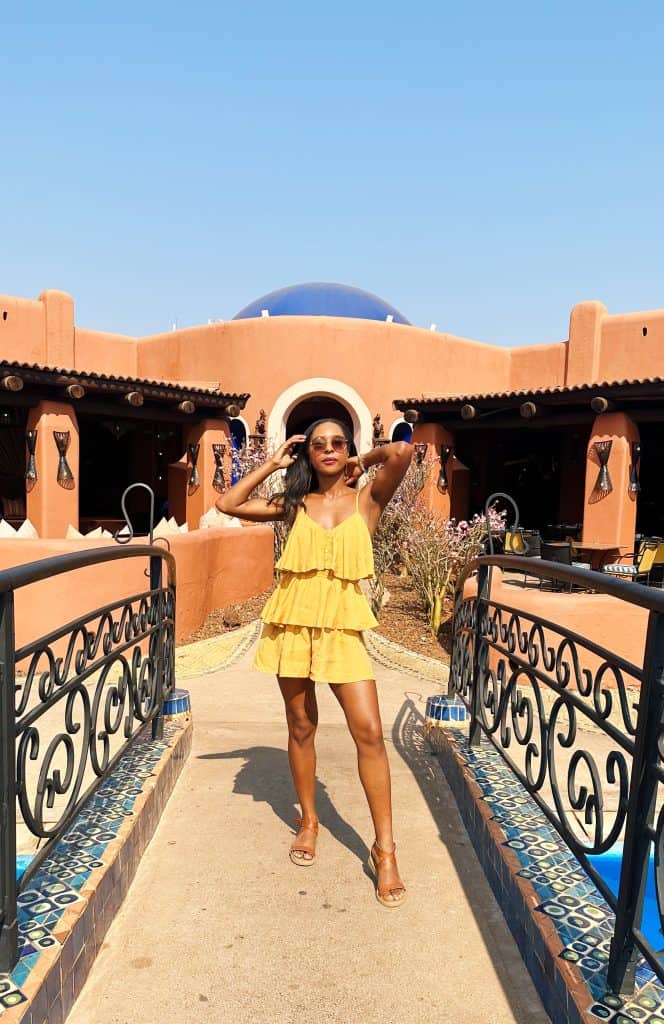

Browse More Safari Lodges Across Africa:
Looking for lodges near the Masai Mara, Serengeti, or other destinations? Browse top-rated options below:
What Not To Bring On Safari
Avoid packing unnecessary items that could cause issues during your trip. Here’s what to leave at home:
❌ Camouflage-patterned clothing – In some southern African countries, wearing camouflage is restricted to military personnel.
❌ Bright or dark-colored clothing – Dark colors like black and blue attract tsetse flies, and bright colors can disturb wildlife.
❌ Single-use plastics – Many countries in East Africa have banned single-use plastic bags (zip-lock bags are acceptable).
❌ Heavy makeup– Safari conditions make minimal makeup more practical—pack only essentials like sunscreen, concealer, and tinted lip balm.
❌ Strong fragrances – These can attract insects and aren’t practical for safari conditions.
❌ Drones- Not allowed at most camps.
❌ High-voltage beauty tools like hairdryers and straighteners- Many camps can’t support electricity for these devices.
❌ Expensive jewelry

Helpful Safari Packing Tips
Packing efficiently can make your safari experience smoother and more enjoyable. Keep these expert tips in mind:
Neutral Clothing
Wearing earth-tone colors like khaki, olive, and tan helps you blend into your surroundings, making it easier to observe wildlife.
Breathable, Lightweight Fabrics for the Heat
Temperatures can get scorching during the day, so opt for moisture-wicking, breathable fabrics like linen or performance synthetic blends to stay cool and comfortable.
Layers for Chilly Mornings & Evenings
Morning game drives can be surprisingly cold, even in the hottest countries. Pack a lightweight fleece or puffer jacket that you can easily remove as the day warms up.
Comfortable, Waterproof Footwear
Whether you’re walking through savannah grasslands or trekking through the mountains, waterproof hiking boots or sturdy sneakers will keep your feet protected and comfortable.
FAQs
Still have questions about your African safari travel checklist? Here are some common concerns:
Is grey okay to wear on A safari?
Yes, grey is fine, but earth tones like khaki, olive, and tan are best for blending in with nature on a safari.
Is it okay to wear jeans on a safari?
Jeans can be uncomfortable in the heat and take longer to dry, so lightweight travel pants are a better option.
Can I wear sneakers on A safari?
Yes, sneakers work well for game drives. However, hiking boots are recommended for walking safaris or gorilla trekking.
Can I wear leggings on safari?
Leggings are great for layering, but may not be ideal for hot weather. Consider lightweight, loose-fitting pants instead.
Final Thoughts: What to Pack for an African Safari
Packing for your bucket list African safari doesn’t have to be overwhelming. Focusing on practical, comfortable, and lightweight essentials will prepare you for an unforgettable adventure. Use this guide as a reference, download the free printable safari checklist, and get ready to experience the breathtaking landscapes and incredible wildlife Africa has to offer!
Planning other warm-weather adventures? You may also find my Jamaica packing list helpful for beach destinations in the Caribbean.
Most South African safari adventures begin in Cape Town.
Here’s everything you need to know about where to stay in Cape Town.
Liked it? Pin it!